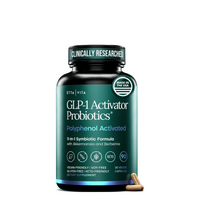
Four ingredient categories have earned serious scientific attention in metabolic health: GLP-1 activator probiotics, berberine, postbiotics, and creatine. Each operates through a distinct, verifiable biological mechanism. Understanding how they actually function separates a purposeful protocol from an expensive collection of label claims with nothing documented behind them.
Key Takeaways
- GLP-1 activator probiotics support the microbial conditions your gut already uses to produce its own satiety hormone
- Berberine's timing relative to meals is worth considering because of how its mechanism operates, though individual responses and protocols vary
- Postbiotics are preparations of inanimate microorganisms and/or their components that may confer a health benefit, distinct from live probiotics and their fermentation byproducts
- Creatine's metabolic relevance extends past athletic performance into cellular energy efficiency, though broader metabolic outcomes depend on individual context
- Third-party product testing can help assess specific quality attributes, depending on the tests performed
Why Is Everyone Talking About GLP-1 Support Supplements?
Pharmaceutical GLP-1 receptor agonists have dominated metabolic health conversations for years. Running alongside that discussion is a sharper, more useful question: can targeted supplementation support your body's own GLP-1 production rather than bypassing your biology with a synthetic signal?
GLP-1 (glucagon-like peptide-1) is a hormone your gut produces in response to food. It contributes to appetite regulation, participates in the sequence governing insulin release, and slows gastric emptying. It's not a hormone you can supplement directly. It's a hormone your gut is already designed to produce, and that distinction shapes everything about how a well-formulated activator probiotic is supposed to work.
The connection to the microbiome is where this conversation gets precise. The intestinal lining contains specialized enteroendocrine L-cells, the specific cell type involved in GLP-1 secretion. When probiotic strains ferment fiber in the colon, they produce short-chain fatty acids including butyrate and propionate. Those short-chain fatty acids bind to receptors on L-cells (specifically GPR41 and GPR43, free fatty acid receptors documented in human intestinal tissue), which may trigger GLP-1 secretion. A probiotic formulated around that pathway works through your existing biological architecture rather than introducing any synthetic signal. For a closer look at the ingredient information behind one such formulation, you can review the GLP-1 Activator Probiotics product page directly.
One limitation deserves direct acknowledgment. GLP-1 activating probiotics work through gradual microbiome modulation. The pathway described above represents established biology, but whether a specific probiotic supplement produces measurable changes in GLP-1 secretion or appetite regulation in a given individual depends on factors that vary from person to person. Expecting the acute appetite suppression associated with pharmaceutical agonists will lead you to the wrong conclusion about whether the product is working. The timeline runs in weeks, and consistency matters more than dose in the early phase.
Does Berberine Actually Compare to Metformin, or Is That Just Marketing?
The metformin comparison appears in published scientific literature, so it deserves examination rather than reflexive dismissal. Both compounds interact with AMPK, an enzyme that acts as a cellular energy sensor. When AMPK activity increases, it shifts how cells handle glucose and how the liver manages glucose output. That shared interaction is the documented basis for the comparison.
The evidence profiles aren't equivalent, though. Berberine has a meaningful and actively growing published research base, particularly in the area of glucose metabolism, but honest evaluation means acknowledging that metformin's pharmaceutical record is longer and more extensively documented. These aren't interchangeable tools with identical backing behind them. Anyone managing glucose with pharmaceutical support should speak with a healthcare provider before adding berberine to an existing protocol.
Timing is a variable worth thinking through carefully. Berberine's activity is most relevant when carbohydrate digestion is actively occurring in the intestinal environment, which is why taking it with meals is a common approach in the published literature. That said, timing considerations aren't universal requirements, and individual responses vary. The dose printed on a label tells you nothing about how much active compound reaches target tissue, and that gap is exactly where the difference between a working protocol and an expensive habit lives.
Bioavailability is the second major variable. Standard powder capsule formulations face genuine absorption challenges at the gut wall, which limits how much active compound reaches systemic circulation. Formulations that address this through phospholipid complexing or comparable delivery technology aren't incrementally better versions of the same product. They're functionally different products. You can explore how Etta Vita approaches formulation design on our story page.
What Are Postbiotics, and Why Are They Attracting Serious Attention?
The term postbiotic has a specific scientific meaning worth getting right. According to the International Scientific Association for Probiotics and Prebiotics (ISAPP), postbiotics are preparations of inanimate microorganisms and/or their components that confer a health benefit on the host. That definition is more precise than the popular shorthand of "fermentation byproducts." Purified short-chain fatty acids or isolated metabolites don't qualify as postbiotics under that definition on their own. The preparation of inactivated microorganisms, or their structural components, is what distinguishes a postbiotic from a fermentation output or a metabolite supplement.
That precision matters because it shapes how you evaluate products in this category. A postbiotic formulation contains specific, characterized preparations rather than variable fermentation outputs, and the proposed health benefit is tied to what those preparations actually are.
Interest in postbiotics comes down to stability and a different delivery logic compared to live probiotics. A live probiotic has to survive stomach acid, reach the colon, and establish sufficient presence in the microbial community before generating meaningful fermentation output. A postbiotic, being a preparation of inactivated microorganisms or their components, doesn't require colonization to be present in the gut environment. It acts on gut-barrier cells, immune receptors, and metabolic signaling pathways through a different mechanism entirely.
It's worth qualifying a common oversimplification here. Not all live probiotics require colonization to provide benefits, and postbiotics don't guarantee faster or stronger metabolic effects than live probiotic formulations in every context. The differences between categories are real, but individual outcomes depend on formulation specifics, the attributes being evaluated, and the person taking them. The cumulative effect of any gut-focused formulation still builds over time.
You can explore gut-focused formulations from Etta Vita across the full supplement collection.
Is Creatine a Metabolic Supplement or Just a Gym Supplement?
Most people associate creatine with athletic performance. That framing is accurate and also incomplete.
Here's the cellular picture. Creatine is stored in muscle tissue as phosphocreatine. When ATP (the cell's primary energy currency) gets used, it breaks down to ADP. Phosphocreatine donates a phosphate group back to ADP, rapidly regenerating ATP without requiring oxygen or glucose metabolism to complete the cycle first. Adequate phosphocreatine stores mean cells maintain energy output more efficiently under metabolic load.
That cellular energy function connects to how muscle tissue handles glucose. Skeletal muscle is a primary site for glucose disposal after meals, and there's scientific interest in how creatine's role in cellular energy capacity may relate to glucose utilization in that tissue. That's why creatine belongs in a metabolic protocol conversation and not only an athletic one. That said, the evidence for broader metabolic and cognitive outcomes varies in strength, and it's worth distinguishing well-established findings in the athletic and energy-metabolism space from claims where the research is still developing.
The honest caveat: creatine's lean-mass support benefits are most pronounced when combined with at least moderate resistance activity. A fully sedentary protocol won't capture the full metabolic picture creatine offers. That's worth knowing before building expectations around it.
How Do These Four Categories Work Together?
These ingredients address different parts of the metabolic picture and sequence logically rather than competing with one another.
Postbiotics and GLP-1 activating probiotics form the foundation layer. They address gut-barrier integrity, appetite signaling, and the systemic environment that shapes how well everything else in a protocol performs.
Berberine sits in the active-support tier, most relevant when post-meal glucose response is a specific target. It works through a different mechanism than gut-focused ingredients, so there's no functional competition between them. One practical consideration worth noting: berberine has documented antimicrobial activity at the gut level, so spacing it apart from a probiotic formulation rather than taking both simultaneously is a reasonable approach when running both. This is a consideration rather than a fixed rule, and your specific protocol may differ depending on your goals and how your body responds.
Creatine is a structural, long-horizon ingredient. Its effects build over months, and expecting acute changes in the first few weeks sets the wrong baseline.
No protocol substitutes for foundational variables. If sleep quality, diet quality, and chronic stress are severely compromised, no supplement stack compensates for them. These ingredients work with your body's existing metabolic machinery. The health guides offer deeper context on building a grounded protocol, and you can browse the complete Etta Vita collection to review formulation details for each category.
What Separates a Verified Supplement From an Expensive Guess?
The most important question isn't what a supplement costs. It's whether the product you're receiving is actually the one that was evaluated for quality.
The gap between a label claim and a verified formulation is invisible until it matters. Ingredient quality, active compound concentration, and delivery form all vary in ways you can't assess from a product page. Etta Vita incorporates third-party product testing into its quality assurance practices. Testing procedures may vary by product and production batch, with some safety testing conducted at the supplier level. That approach is part of how the brand works toward the transparency it's built around.
Every order ships free, so the price you see is what you pay with no surcharge quietly inflating your spend.If you have questions about product ingredients or usage instructions, you can contact Etta Vita's support team. Customer support is available seven days a week.
| What You're Evaluating | Choosing Verified Formulations | Buying Without Quality Documentation |
|---|---|---|
| Active compound at stated dose | May be assessed through applicable independent quality testing | Unknown without independent testing |
| Bioavailability | Depends on ingredient characteristics and formulation design | Dependent on a delivery form the label doesn't disclose |
| Probiotic viability | Depends on formulation, handling, storage, and available quality information | Varies with storage and encapsulation quality you can't assess |
| What you're paying for | A formulation with documented quality considerations | A label claim with no accountability behind it |
| Real cost | Purchase price | Purchase price plus the cost of zero therapeutic effect |
When you're ready to build a protocol grounded in verified mechanisms, browse the full supplement collection and start with the ingredient category that addresses your most pressing goal.
Frequently Asked Questions
How long does it take for GLP-1 activating probiotics to produce noticeable effects?
Meaningful changes in appetite regulation, if they occur, typically require several weeks of consistent use. The mechanism runs through microbiome modulation: the relevant bacterial populations need time to establish, produce fermentation output, and generate the short-chain fatty acid concentrations that may stimulate L-cell activity. Whether a specific supplement produces measurable changes varies by individual. Consistency matters more than dose in the early phase. Expecting pharmaceutical-level acute appetite suppression from a probiotic formulation will lead you to the wrong conclusion about whether it's working.
Can I take berberine and a GLP-1 probiotic at the same time?
They work through different pathways, so there's no metabolic competition between them. Timing is the practical consideration. Taking berberine with meals aligns with how its mechanism is most commonly studied. Spacing your probiotic formulation away from berberine is a reasonable precaution given berberine's documented antimicrobial activity at the gut level, though this is a consideration rather than a hard rule. Individual protocols vary, and a healthcare provider can help you decide what spacing makes sense for your situation.
Is creatine worth taking if I'm not exercising regularly?
Creatine's cellular energy benefits don't require intense exercise to be relevant, but lean-mass support is most pronounced with at least moderate resistance activity. A fully sedentary protocol won't capture everything creatine may offer metabolically. The ATP regeneration and cellular energy applications remain worth understanding independent of training status, which is part of why it belongs in a metabolic conversation beyond athletic contexts.
What makes a postbiotic supplement different from eating fermented foods?
Fermented foods contain live bacteria and some compounds associated with fermentation, but their concentration and composition vary depending on the food, the fermentation process, and storage conditions. A postbiotic supplement, under the ISAPP definition, delivers a preparation of inanimate microorganisms and/or their components at consistent, characterized doses. That consistency is difficult to replicate from food sources, and the distinction between a postbiotic preparation and a general fermented food matters when you're evaluating what a specific product actually contains.
How do I know whether a berberine supplement contains what the label claims?
You can't confirm this without independent quality testing. Variation between actual content and label claims is a documented issue across the supplement category. Independent testing can provide additional information about specific quality attributes evaluated, though the availability and scope of testing documentation varies by brand and product. Looking for brands that incorporate third-party quality testing into their practices is a reasonable starting point. The depth and accessibility of that documentation will differ depending on the tests performed and how the brand communicates its quality assurance approach.
Should I cycle berberine, or can I take it continuously?
Cycling is an approach some practitioners consider given how closely berberine's AMPK mechanism parallels certain pharmaceutical interventions. There's no settled clinical consensus on whether cycling is necessary or on optimal cycle length if someone chooses to do it. It's a reasonable precaution for some people rather than an established requirement. If you're using berberine for specific glucose management goals, discussing extended continuous use with a healthcare provider before committing to a long-term protocol is a sensible step.
What's the actual difference between a standard probiotic and a GLP-1 activator probiotic?
A standard probiotic targets general gut flora diversity and digestive support. A GLP-1 activator probiotic is formulated with strains specifically selected for their capacity to produce the short-chain fatty acids that bind to free fatty acid receptors on enteroendocrine L-cells, the cell type involved in GLP-1 secretion. Strain selection is the critical variable. Not all probiotic strains produce meaningful GLP-1 pathway effects, and a label that reads "probiotic" tells you nothing about whether the right strains are present at concentrations relevant to that specific pathway.